
The 99.99% Problem: Why Hardening the Grid Isn't the Only Answer for Remote Assets
This is the first post in a series on how to use EASI to model distributed energy systems. We're starting where the use case is already proven with remote power and backup resilience, before moving into how the same modeling approach extends to emerging and more complex use cases.
Traditionally, utilities and asset owners have only had two levers to pull for communities and critical assets at the end of long feeder lines in a wildfire-prone or geographically remote area: harden the wires or run diesel generators long-term.
The problem with hardening the wires
Undergrounding distribution lines, upgrading conductors, and adding sectionalizing switches are proven mitigations, but they're also slow, expensive, and often disproportionate to the asset they're protecting. A single mile of undergrounded line in difficult terrain can cost millions of dollars and take years to permit and construct.
Meanwhile, Public Safety Power Shutoff (PSPS) event frequency and duration are increasing and spreading geographically.
The shift: stop fighting the wire, control the node
The alternative doesn't need the wire at all, or at least not continuously. A properly sized microgrid (solar generation, battery storage, and an intelligent controller) can island instantaneously the moment upstream power degrades and keep operating independently for as long as the outage lasts. Instead of trying to push 99.99% reliability down a hundred miles of exposed line, you generate it locally, at the node, where you control the variables.
Where EASI and the hardware come in
The catch with local generation is that if you undersize the system, you've built an expensive backup generator that runs out of runway on day two of an extended outage. Oversize it and the project never pencils.
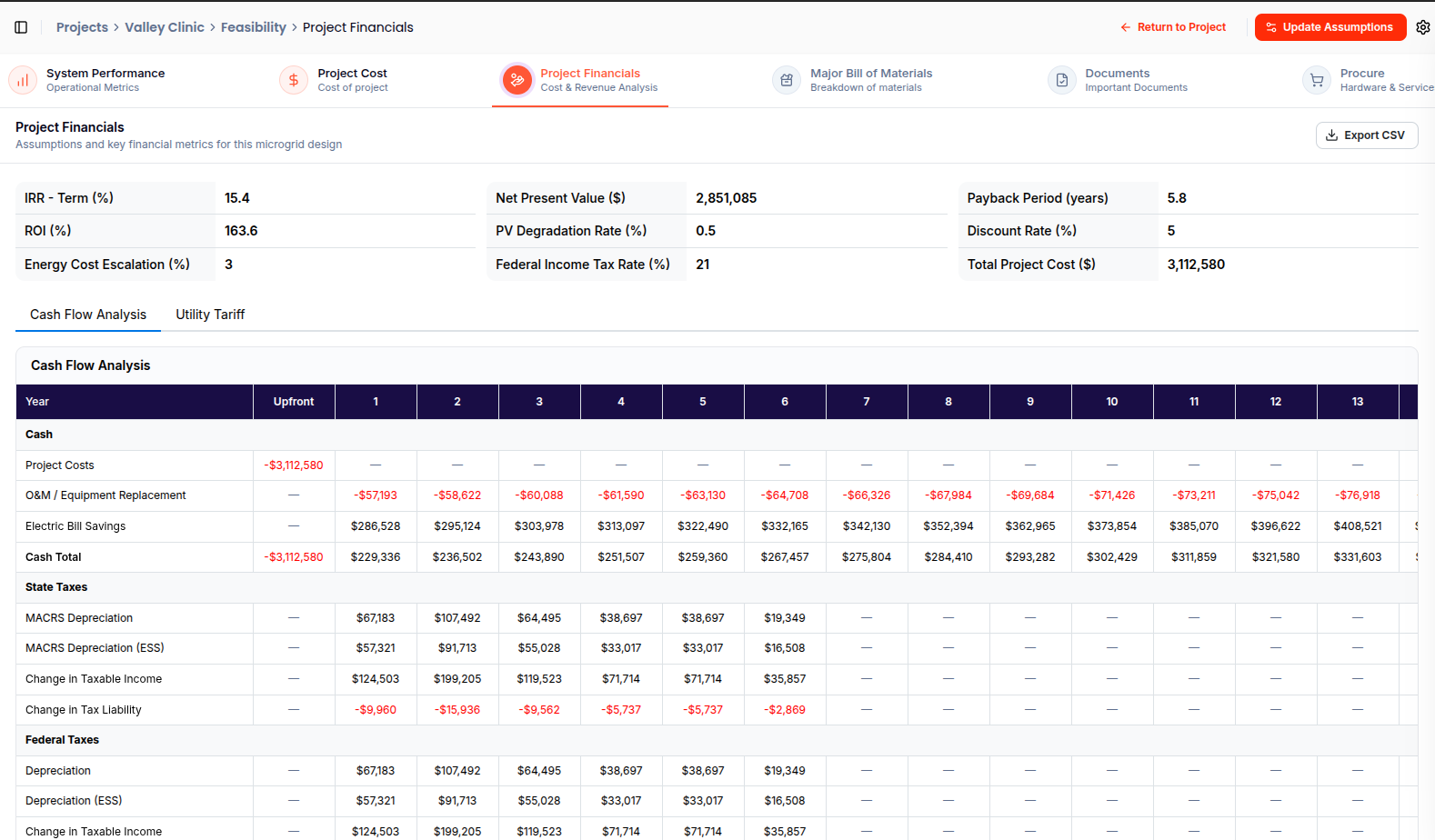
This is the problem EASI is built to solve. EASI ingests site-specific environmental data — solar irradiance, historical weather patterns, outage frequency and duration in the local territory — and models how a system needs to perform under real, prolonged stress. The output is a layout matched directly to BoxPower's weatherized, FEOC-compliant hardware kits.
In the video below, we'll model a remote commercial facility in California and walk through how EASI configures a microgrid to carry it through an extended PSPS event or grid failure.
Have a site like this? Model it yourself in EASI, free.
Ready to test EASI firsthand?
Upload your 8760 profiles, size complex solar + storage systems, and design optimal microgrids in minutes.