
Capacity Bridging: Turning Interconnection Delay Into a Revenue Asset
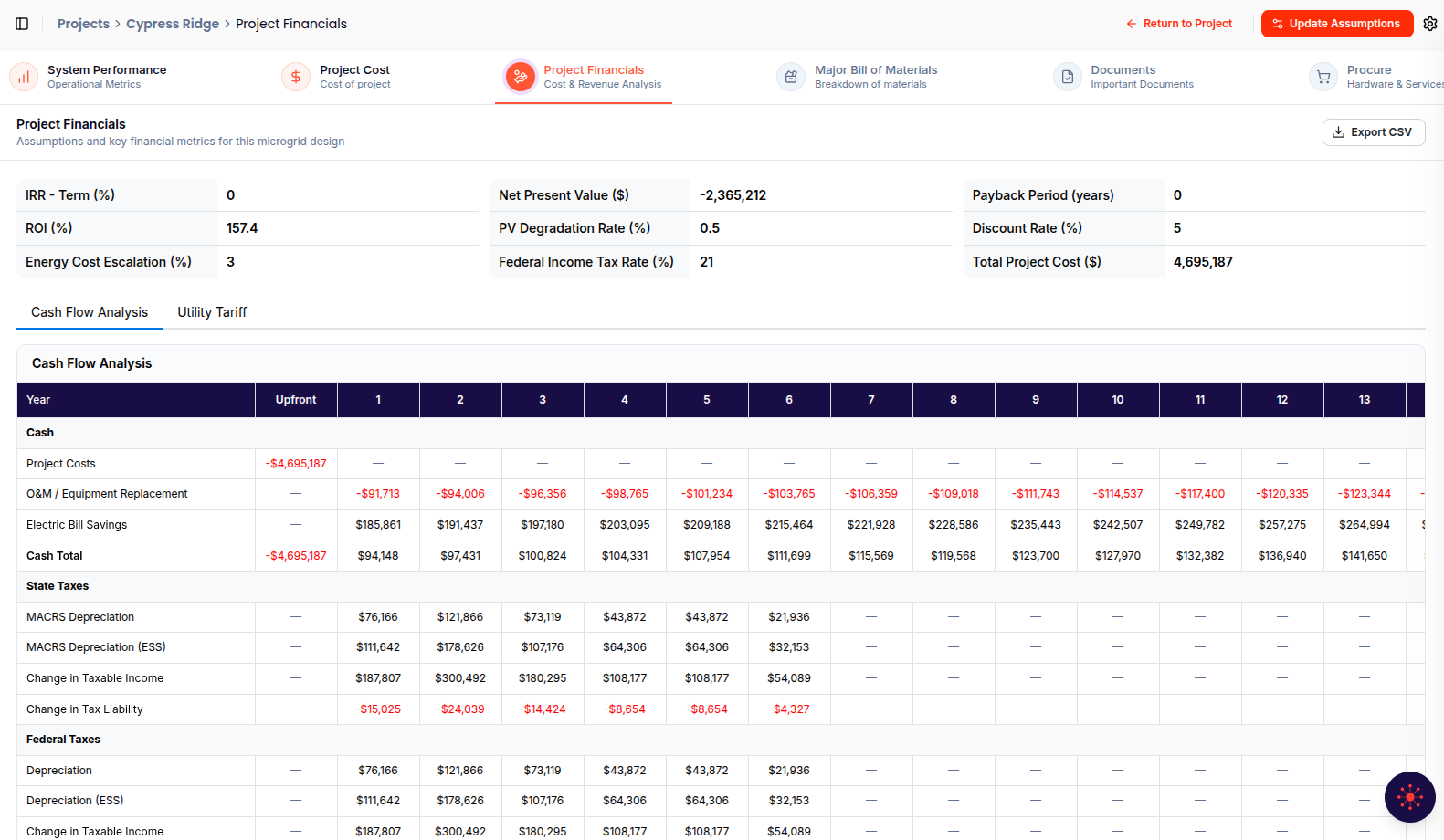
This is the second post in our series on how to use EASI to model distributed energy systems. Our first post looked at remote power and backup resilience. This post covers a different problem entirely: an asset that isn't remote or exposed to outages at all. It's fully built, in a normal service territory, and still can't turn on.
Picture a 100-home residential development. Construction is complete, and the development is ready to sell. The only thing standing between the developer and revenue is roughly 1 MW of grid capacity — and the utility interconnection queue says that capacity is 3 to 5 years out.
This isn't an edge case. It's the same story playing out across data centers, industrial parks, EV fleet depots, manufacturing expansions, and residential developments nationwide: the asset is ready before the grid is.
The problem with waiting for the queue
Interconnection delays are a structural problem. Most utilities across the country are processing capacity requests against constrained substation and feeder capacity, often on a first-come, first-served basis, with system impact studies, upgrade sequencing, and construction timelines stacked one after another rather than run in parallel. Queue times of 3 to 5 years — sometimes longer — have become the norm in high-growth and constrained territories, and the queue doesn't discriminate between a $500K project and a $50M one.
For any asset owner caught in that queue, the underlying economics are the same. Every month without power is a month of debt service, property tax, insurance, and opportunity cost on capital that's already been deployed, with zero revenue offsetting it. Run that math over 3 to 5 years and the carrying cost of the delay can rival the cost of a power solution outright.
The shift: bridge the gap, don't wait it out
The alternative is to stop treating onsite generation as a stopgap and start treating it as a bridge asset with its own return. A behind-the-meter capacity bridge, deployed quickly, lets an asset take occupancy and start generating revenue immediately.
The economics get better once interconnection eventually arrives. When utility power shows up, a capacity bridge can be repositioned as a permanent value-generating asset with peak shaving, demand charge management, backup resilience, or even export.
The common thread across every version of this problem — residential, industrial, commercial — is that speed to power has become its own form of value. The asset owner who can generate revenue in month one instead of year three isn't just avoiding carrying costs; they're capturing years of return the queue would otherwise have erased.
Where EASI and the hardware come in: a real case, sized in minutes
The hard part of a capacity bridge is the timeline. An asset owner facing a multi-year queue delay needs a right-sized configuration fast, with hardware that can be fielded inside a sub-12-month operational window.
EASI is built to move at the speed the problem demands. Instead of a custom engineering study measured in weeks, EASI takes a standard load profile and, in minutes, sizes a standardized BESS and generator configuration against it. The output maps directly to BoxPower's modular hardware kits, so the system EASI sizes is a system that can be ordered, built, and commissioned inside the window the project has.
In the video below, we'll show exactly what that looks like: inputting a standard ~1 MW peak 100-home load profile into EASI and sizing a microgrid — the same configuration a real fast-tracked residential development would need to occupy and start generating revenue immediately.
Need onsite power for your asset ASAP? Model it yourself in EASI, free.
Ready to test EASI firsthand?
Upload your 8760 profiles, size complex solar + storage systems, and design optimal microgrids in minutes.